Remembering the Holocaust: Voices of Resilience, Leadership, and Hope on International Holocaust Remembrance Day
TABLE OF CONTENTS
Introduction
International Holocaust Remembrance Day on January 27 commemorates the liberation of Auschwitz-Birkenau in 1945, when Soviet forces uncovered the horrors of the Nazi extermination camp. Designated by the United Nations in 2005, this day honors the 6 million Jews and millions of others murdered during the Holocaust, reaffirming global commitments to human dignity and rights. In 2026, the theme “Holocaust Remembrance for Dignity and Human Rights” underscores remembrance as a defense against rising antisemitism, hatred, dehumanization, and apathy.
Why Remembrance Matters Today
Over 80 years later, the Holocaust's lessons remain urgent as antisemitism surges worldwide. The UN notes daily assaults on citizens fueled by hatred and Holocaust distortion, while denial persists amid modern conflicts. Remembrance dignifies victims, preserves their erased communities, and affirms their humanity, countering falsehoods and promoting universal rights essential to peace.
Key Statistics and Trends
- Nazis systematically murdered 6 million Jews (two-thirds of Europe’s Jewish population) and approximately 5 million others, for a total of 11 million victims, including 1.5 million children.
- Over 44,000 camps/ghettos operated across Europe, with killing centers like Auschwitz (~1 million Jews gassed), Treblinka (~925,000), Belzec (~435,000), Sobibor (~167,000), and Chełmno (~152,000), murdering ~2.7 million via gas alone.
- Mass shootings killed ~2 million Jews in 1,500+ sites; Operation Reinhard (1942) alone murdered 1.47 million in 100 days at hyperintense rates.
- Methods included gassing, starvation, forced labor, medical experiments, and marches; prewar Jewish population in Poland fell from 3.3 million to ~45,000 by 1950.
Fastforward to the here and now:
- Approximately, fewer than 200,000 Holocaust survivors remain worldwide as of 2026, down from 220,000 in 2025, with half (~97,600) in Israel and ~31,000 in the US; 90% may pass within 15 years.
- Only 29 states mandate Holocaust education.
- According to the Anti-Defamation League, US antisemitic incidents exceeded 9,000 in 2024-2025, with spikes continuing into 2025 amid online extremism and campus harassment. 83% of Jewish college students report antisemitism since October 2023.
From the industrialized extermination to today's fading witness generation and resurgent antisemitism and hate crimes, these statistics trace a path of devastation from past horrors to present threats. They paint a stark picture of memory's fragility amid denial and the persistence of hate. The leaders featured in this article have dedicated their lives to bridging this gap through innovative work that is vital to ensuring Holocaust lessons endure and inspire the next generation to build resilience and take action tomorrow.
Request a Demo
Find out more about our fun, competitive and engaging virtual fitness challenges.
 Get In Touch
Voices from the Frontlines
The leaders below, from museums and mobile exhibits to grassroots memorials and theater programs, offer diverse paths to remembrance. Their stories reveal innovative ways to engage students, communities, and corporations, turning history into action against bigotry.
Ann Arnold & The Mark Schonwetter Holocaust Education Foundation: Turning One Family Story into 240,000 Student Lessons
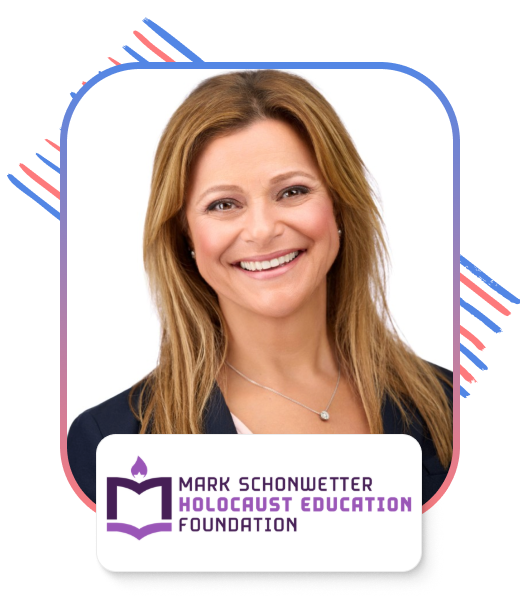
Ann Arnold approaches Holocaust education from a deeply personal place, yet she runs her foundation with a very professional, systems‑minded lens. After a corporate career in the jewelry business and ongoing work as CFO/Operations Manager at H. Arnold Woodturning, she set out to document her father’s Holocaust survival story, first in a blog and then in a 2016 book. That project opened her eyes to how fragile memory can be, and how often powerful stories never make it into classrooms because educators simply lack time, budgets, or access to good materials.
Seeing how many teachers were paying out of pocket or fighting for tiny slices of school budgets, Ann created the Mark Schoemetter Holocaust Education Foundation to remove that barrier. The foundation’s mission is straightforward: get high‑quality Holocaust education resources into classrooms so students learn to respect and and be kind, and to use their voices for good, not hate. Since 2020, the program has run an annual August–October grant cycle, offering up to $1,000 per teacher for student-focused projects. Since its inception, the foundation has received over 800 applications, funded the vast majority of them, and reached nearly 240,000 students across 42 states, even though only 29 states currently mandate Holocaust education.
The stories Ann hears back from teachers are what keep her going. In Yancey County, North Carolina, educators used grant‑funded programming to counter pro‑Nazi recruitment efforts targeting local students. In California, one teacher reported that after a deep Holocaust unit, students stopped casually using the N‑word in school. For Ann, these are proof points that Holocaust education is not only about understanding history; it’s a practical tool for confronting contemporary antisemitism, racism, and hate, and for nudging cultures toward dignity and tolerance. The program's growth from 30 schools to nearly 300 per year in five years shows how hungry teachers are for this kind of support when they know it exists.
Behind the scenes, Ann has had to think like both a fundraiser and a network builder. Early funding came mostly from family and friends, but she’s pushed herself to expand that circle through networking, partnerships, and a more intentional social media presence. One of her major projects has been developing a Holocaust Education Hub that has now mapped more than 200 organizations across the country, from commissions and museums to teaching centers. That hub not only guides teachers to vetted resources; it also positions the foundation as a connector, able to spotlight partners such as the Tennessee Holocaust Commission, the Zeckelman Holocaust Center, or the Anne Frank Center in South Carolina.
Ann’s leadership style is grounded in listening and continuous learning. She doesn’t present herself as the ultimate authority; instead, she sees her role as empowering teachers and organizations that are already doing vital work, and making it easier for them to succeed. She talks about leading by staying curious, asking good questions, and giving people room to bring their expertise to the fore. In many ways, the foundation is an extension of her father’s story and her own: a bridge between family memory and national classrooms, designed so that the next generation not only learns what happened, but also feels responsible for what happens next.
Learn More - https://mshefoundation.org/
Todd Cohn & Hate Ends Now: Stepping Into History to Confront Hate Today
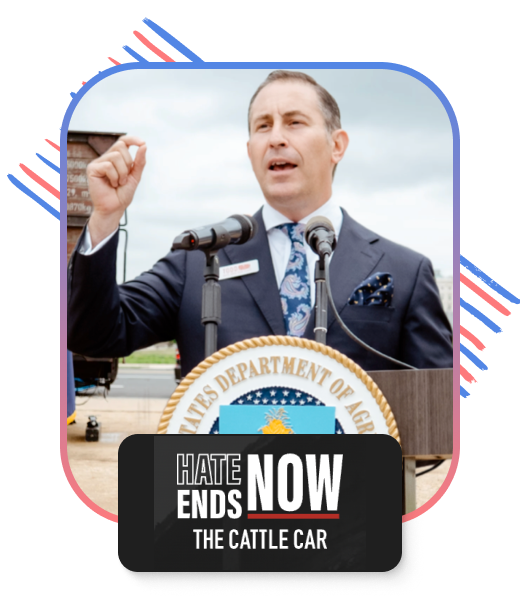
Todd Cohn leads Hate Ends Now with a clear conviction: if people can physically step into a piece of Holocaust history, they are more likely to recognize and challenge hate in their own lives. The organization’s centerpiece is “The Cattle Car: Stepping In and Out of Darkness,” a restored Holocaust‑era cattle car that travels to schools and communities. Inside, a 360‑degree immersive film combines survivor testimonies, historical context, and powerful visuals, asking visitors not only what happened, but what indifference and prejudice look like now, and what responsibility they personally carry.
Around that experience, Hate Ends Now builds interactive programming that turns emotion into action. Students and community members participate in activities like QR‑code scavenger hunts that connect the history of the Holocaust to contemporary hate, bullying, and discrimination, and they add their thumbprints to collective canvases symbolizing a commitment to be “upstanders,” not bystanders. The aim is less about memorizing dates and more about internalizing values: empathy, moral courage, and the willingness to speak up when others are targeted.
Operationally, Hate Ends Now runs like a lean, touring exhibit. A single cattle car unit and a team of six staff travel from site to site, clustering school and community bookings so that each road trip yields four to five full days of programming. That model allows them to reach roughly 250–300 people a day and about 30,000 students and community members annually across around 90 locations, while keeping travel costs manageable. Todd carefully considers routing, scheduling, and on-site flow because every hour spent on logistics is an hour not spent in the car with participants.
As demand grows, Todd is steering the organization toward a decentralized, “franchise‑like” future. Rather than building a massive central touring operation, Hate Ends Now plans to help other communities create their own cattle car exhibits, providing the content, storytelling framework, and technical expertise while local partners handle operations and outreach. Each new unit costs on the order of half a million dollars to build and deploy, so the financial model blends multiple streams: venue fees cover about half of operating costs, state funding adds roughly 30 percent, and private donations fill the remaining 20 percent. The mix is designed to keep the program sustainable without drifting away from its educational mission.
Underneath those numbers is a leadership philosophy centered on reflection and agency. Hate Ends Now’s stated commitment is to “encourage people to reflect on the depths of evil” while inspiring conversations about genocide, indifference, and the choices ordinary people make, and to “motivate individuals to get involved in preventing hate crimes and maintaining a sense of unity with each other.” Todd talks about the work not just as preserving memory, but as building everyday moral leaders - students who, after stepping into the darkness of the cattle car, step back out more willing to challenge slurs in a hallway, call out online hate, or stand with classmates who are targeted. The traveling exhibit becomes a moving classroom, turning the weight of history into a prompt for courage now.
Learn More - https://www.hateendsnow.org/
Bernard Cherkasov & the Illinois Holocaust Museum: Remembering the Past to Transform the Future
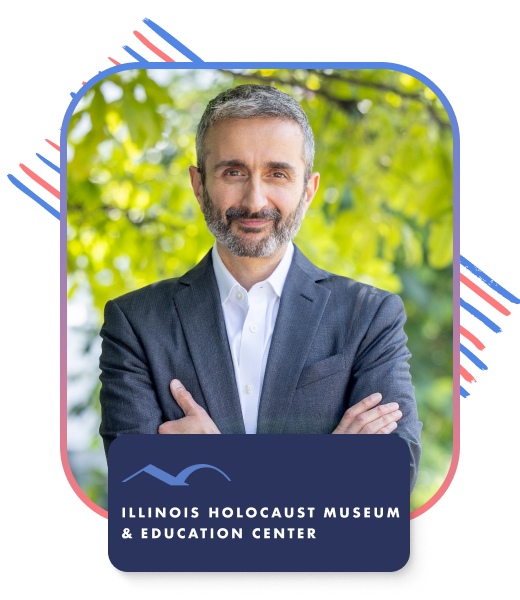
Bernard Cherkasov’s leadership of the Illinois Holocaust Museum and Education Center is shaped by a personal history of displacement and resilience. As a teenager fleeing antisemitism in Azerbaijan in the late 1980s, he experienced firsthand the fear of persecution and the quiet courage of strangers who offered food, clothing, and shelter along the way. Those memories now fuel his conviction that education, empathy, and community engagement are the most powerful tools for combating hatred today.
The Museum’s founding principle, “Remember the Past, Transform the Future”, guides everything it does. Originally established in Skokie, Illinois, by Holocaust survivors, the institution honors those who were lost while teaching universal lessons that confront antisemitism, racism, and all forms of prejudice and indifference. Under Bernard’s direction, that mission has expanded both physically and technologically, most visibly through the Illinois Holocaust Museum’s Experience360.
Experience360 offers visitors a panoramic, immersive journey through history and truth. It's 360‑degree film experiences transport guests into survivors’ childhood hometowns, hiding places, and concentration camps, while the Lillian & Larry Goodman Foundations Holography Theater features interactive holograms of survivors such as Fritzie Fritzshall and Aaron Elster. Using high‑definition recordings and voice‑recognition technology, visitors can ask questions and engage in what feels like a one‑on‑one conversation, turning testimony into an intimate, living dialogue rather than a static exhibit.
At the heart of the Museum’s work is the belief that stories of survival, resistance, and upstanderism are the most effective means of inspiring moral courage. Through permanent and rotating exhibitions, school programs, and community events, the Museum reaches hundreds of thousands of learners each year. Its Teaching Trunks (mobile educational kits equipped with virtual reality headsets and curricular materials) bring immersive Holocaust education directly into classrooms across the country.
Bernard emphasizes that technology is never an end in itself. “When a student looks into the eyes of a holographic survivor and asks, How did you keep going?, they’re not just studying history,” he explains. “They’re becoming witnesses, and that changes how they see their own responsibility in the world.” That ethos extends to the Museum’s broader programming, including the Ellen V. & Philip L. Glass Holocaust Commemorative Series and initiatives that connect Holocaust memory to contemporary issues such as rising antisemitism, genocide, and human‑rights violations.
Leadership, for Bernard, is rooted in reflection, inclusion, and surrounding oneself with people who challenge and inspire. He often recalls a message from one of the Museum’s holographic survivors: that even in the darkest moments, there is room for hope. That conviction, paired with the Museum’s mission to combat hatred, prejudice, and indifference, defines both his personal journey and the institution’s role in shaping a more just and compassionate future.
Learn More - https://www.ilholocaustmuseum.org/
Dave Reckess & 3GNY: A Living Link to the Holocaust
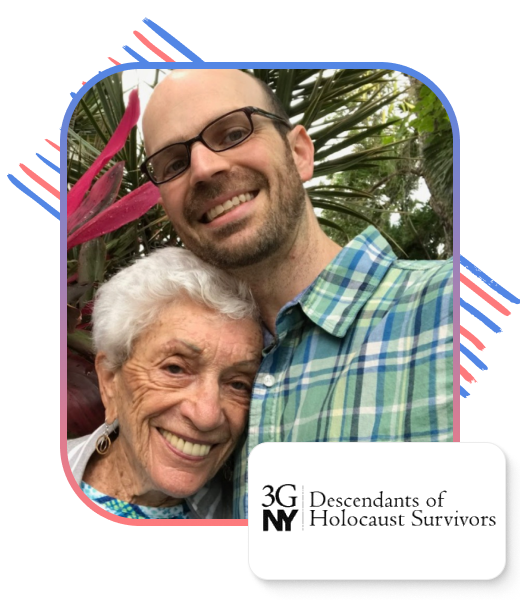
Dave Reckess leads 3GNY with the conviction that Holocaust memory is most powerful when it is personal and alive in the next generation. As Executive Director of this educational nonprofit founded by grandchildren of survivors, he oversees programs that help 3Gs (third‑generation descendants) share their family histories with students and communities, turning inherited stories into tools for empathy and moral reflection.
3GNY describes itself as “a living link to the Holocaust,” preserving both the legacies and the lessons of survivors. Its mission is to educate diverse communities about the perils of intolerance while providing a supportive forum for descendants of survivors to process and share their experiences. In practice, that mission comes to life through structured school and community presentations: volunteers frame key historical context, then speak in the first person about their grandparents’ journeys, childhoods shattered, years of persecution and survival, and the rebuilding of life afterward.
Dave shared that 3GNY has trained more than 600 volunteer speakers, who have collectively reached over 80,000 students with these family narratives. The impact, he notes, is visible in the way students respond. In one school, after hearing a grandchild speak, classmates rallied around a peer who had been targeted with antisemitic remarks, using the presentation as a springboard to challenge hate in their own hallway. For Dave, those moments, when history changes behavior, capture the heart of the work.
Under his leadership, 3GNY has expanded beyond its New York roots, building a broader footprint while staying grounded in its 3G identity. A key step in that evolution is Living Links, a national network designed to support descendants of survivors across the country, giving them training, community, and a framework to bring their stories into local schools and institutions. Financially, the organization relies primarily on individual donations and grants, including a recent “Chai Campaign” celebrating its 18th anniversary, which used the Hebrew word chai (“life”) as both a fundraising theme and a statement of resilience.
Dave’s leadership philosophy is rooted in empathy and integrity. Inspired by his grandmother’s survival and her capacity to hold onto humanity despite what she endured, he focuses on building strong, trust‑based relationships with volunteers, partners, and educators. He sees Holocaust education not just as the transmission of facts, but as a practice of modeling the values 3GNY seeks to instill: listening deeply, honoring lived experience, and taking responsibility when confronted with prejudice or injustice. Through 3GNY’s work, he hopes that every student who meets a grandchild of survivors walks away understanding that the Holocaust is not distant history, but a living call to confront hate wherever they encounter it.
Learn More - https://www.3gny.org/
Rick Schaffner & The Zekelman Holocaust Center: Engaging, Educating, and Empowering Through Memory
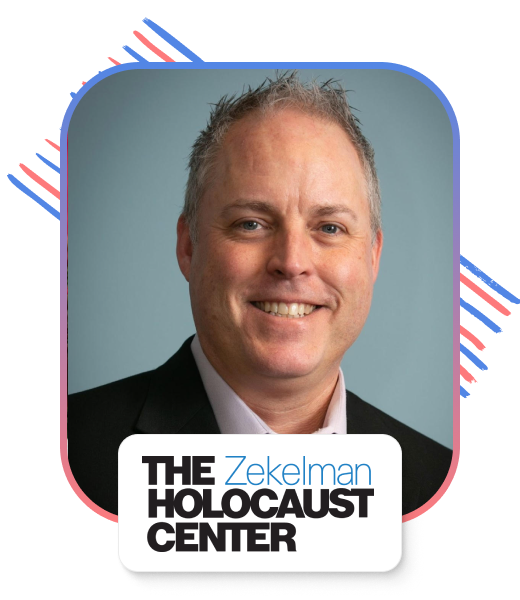
Richard (Rick) Schaffner came to Holocaust education through a global path. After spending years working in public schools and in international roles, including his work with the Chinese government, he was drawn to the Zekelman Holocaust Center by its mission to “engage, educate, and empower by remembering the Holocaust.” Today, as Senior Manager of Education, he channels his background in teaching and relationship‑building into programs that help visitors connect history to their own responsibility to act.
Located in Farmington Hills, Michigan, the Zekelman Holocaust Center is the state’s only Holocaust museum and a 55,000‑square‑foot museum, library, and archive. It welcomes around 100,000 visitors each year, including approximately 30,000 students from Michigan, northwest Ohio, and Windsor, Canada, who come through school field trips and other educational programs. Rick oversees teacher education and designs workshops for K–12 educators, lawyers, religious groups, corporate teams, and security‑sector professionals, including police officers and ROTC students, with a focus on ethical decision‑making, combating antisemitism, and promoting upstander behavior.
The Center’s core exhibits are built to make history both tangible and reflective. Visitors encounter spaces such as the Eternal Flame & Memorial Wall, which honor victims and symbolize ongoing remembrance, and the Henrietta and Alvin Weisberg Gallery, whose centerpiece is a Holocaust‑era boxcar that anchors a powerful narrative about deportation by train to ghettos, concentration camps, and death camps.
Sustainability and growth are constant themes in Rick’s work with the leadership team. The Center is in the midst of a long‑term comprehensive and endowment campaign with a goal of $100 million over roughly a decade, supported in part by a landmark $15 million gift from the Zekelman family and Zekelman Industries, the largest donation in the Center’s history. Rick emphasizes making each gift feel tangible: donors are often connected directly to specific initiatives that reflect their passions, such as student art competitions, bus subsidies that enable schools to visit, or particular educational programs. Personalized thank‑you notes and stories from participants help donors see the concrete impact of their support, while grant funding helps underwrite operational costs so that frontline education work can remain strong.
Rick’s own leadership philosophy centers on accessibility, direct communication, and creating a psychologically safe environment where colleagues feel empowered to take risks and be creative. He often frames his approach in terms of relationships—whether partnering with law firms and universities, or sitting with a teacher who is unsure how to address rising antisemitism in their classroom.
Looking ahead, Rick is both curious and cautious about emerging technologies, such as AI, in Holocaust education. He notes that some institutions are experimenting with AI‑driven testimony platforms that allow students to “ask” survivors questions, but he is mindful of concerns around authenticity, consent, and potential misuse. What excites him more is the shift from competition to collaboration among Holocaust centers and education organizations: sharing resources, coordinating efforts, and presenting a united front against antisemitism and other forms of hate. In his view, the Center’s role, anchored by its exhibits, survivor community, and educational programs, is to help every visitor move from learning the history to asking, “What does it mean for how I show up, speak up, and stand up today?”
Learn More - https://holocaustcenter.org/
Lauren Bairnsfather & The Anne Frank Center USA: Theater, Truth, and Young People’s Courage
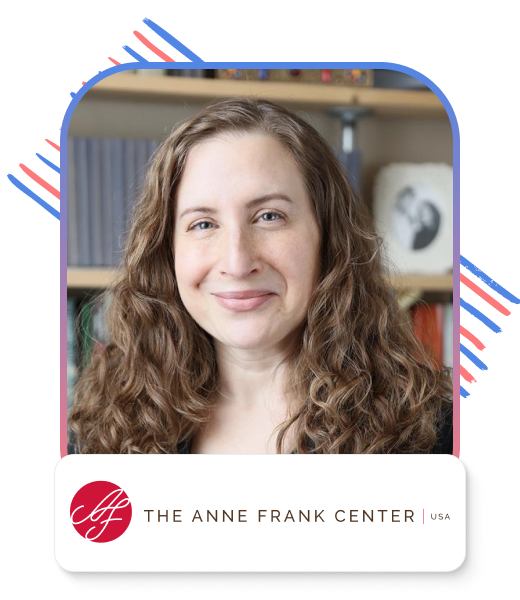
Lauren Bairnsfather leads the Anne Frank Center USA with the conviction that young people, given honest history and powerful stories, can become courageous upstanders in their own communities. Her path into Holocaust education began with a 1993 visit to the U.S. Holocaust Memorial Museum in Washington, D.C., where she spent hours walking the exhibits with her grandparents and first understood how memory, evidence, and moral choice intersect. That experience, together with years in education and public history, shapes her work as CEO of an organization that “believes in the power of young people to change the world” through the lens of Anne Frank’s diary.
The Anne Frank Center USA traces its roots to Otto Frank’s (Anne’s father) 1950s efforts to share his daughter’s words and lessons with audiences in the United States. Over time, the work evolved from a more traditional, place‑based model into a decentralized education organization that brings programs directly to schools and communities. Today, its mission is to use Anne’s story to challenge antisemitism and all forms of hatred, and to inspire young people to build a more compassionate and just future.
At the core of that mission are theater‑based education programs that travel primarily to K–12 settings in 28 states. Productions such as “Conversations with Anne” and “Letters from Anne and Martin” blend performance, historical framing, and live Q&A so students encounter Anne as a real teenager, not a distant symbol. These programs are designed to align with state Holocaust education mandates while remaining grounded in accurate historical context and evaluation to understand their impact.
Lauren is keenly aware that the environment for Holocaust education is shifting. Shorter attention spans, social media, and AI have changed how young people consume information, making it easier for denial, distortion, and conspiracy theories to spread. She sees part of the Center’s role as helping students recognize propaganda, verify sources, and think critically, even as the organization experiments carefully with new formats such as bite‑sized content or educational games that stay true to the history.
To sustain and grow this work, Lauren is deliberately diversifying funding. Individual donors remain vital, but she is expanding into corporate sponsorships, foundation support, and endowment building to create a more stable financial base. She’s candid about how resource‑intensive individual stewardship can be and hopes to grow the development team to deepen relationships while cultivating institutional partners aligned with the Center’s mission.
Her leadership philosophy centers on honesty, empathy, and open communication. Lauren emphasizes clear expectations, transparency about challenges, and working alongside her team rather than directing from afar. Her advice to emerging leaders, maintain mentor relationships, stay mission‑focused, be a good colleague, and don’t take criticism personally, mirrors the kind of grounded, courageous empathy the Anne Frank Center USA seeks to instill in the students it serves.
Learn More - https://annefrank.com/
Kali Cusimano & the Council for Holocaust Awareness of Idaho: Building Responsible Education from the Ground Up
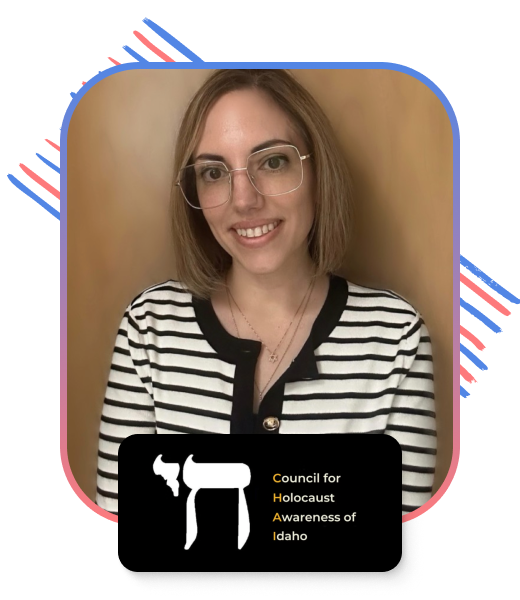
Kali Cusimano leads the Council for Holocaust Awareness of Idaho (CHAI Idaho) with the belief that careful, responsible education can change how communities respond to antisemitism and hate. As Executive Director and co‑founder, she draws on a master’s degree in Holocaust and genocide studies and ongoing PhD work in antisemitism studies, but her motivation is also deeply personal. Her interest in the Holocaust began in elementary school as a warning about what happens when societies fail their most vulnerable, and it sharpened when her own son experienced antisemitic behavior at school, an incident that pushed her to turn academic knowledge into concrete action.
Founded in June 2024, CHAI Idaho focuses on bringing responsible Holocaust education and antisemitism awareness to Idaho, a state where many educators lack training and worry about controversy. The organization offers free programming, including film premieres, panel events, and presentations that incorporate survivor testimony when possible, and Kali often steps into classrooms herself, from her children’s school to wider community venues, to model how to teach difficult history with empathy and rigor. Early results have included a noticeable reduction in bullying in settings where she has worked directly with students and staff, reinforcing her belief that good education can shift behavior.
Financially, CHAI operates on a grassroots model, relying on donations and local support and reinvesting funds directly into programming rather than salaries. Because the organization is so new, it has not yet been eligible for many grants, but Kali sees this early phase as a time to build trust, credibility, and community relationships that will underpin future sustainability. She is intentionally pursuing slow, steady growth, choosing partners carefully so that every collaboration aligns with high standards of accuracy and ethics in Holocaust education. In a small field where organizations sometimes view one another as competitors for limited funding, she argues for collaboration over scarcity thinking, noting that the Holocaust education sector is tight‑knit and relationships matter as much as dollars.
Kali describes her leadership journey as an organic response to community needs rather than a planned career path. Her style centers on leading by example, being willing to take on any task she asks of others, staying close to the work on the ground, and modeling the humility and diligence she hopes to see in her team and volunteers. She is especially excited about a new student initiative that will bring together young people from different schools to compare their Holocaust education experiences and work collaboratively on improvements in their own environments. For Kali, efforts like these capture what CHAI is striving to do: not just teach about the past, but empower the next generation to recognize antisemitism, challenge it, and help build communities that are both informed and compassionate.
Learn More - https://www.chai-idaho.org/
Andrea Videlefsky & The Daffodil Project: A Living Memorial in Bloom
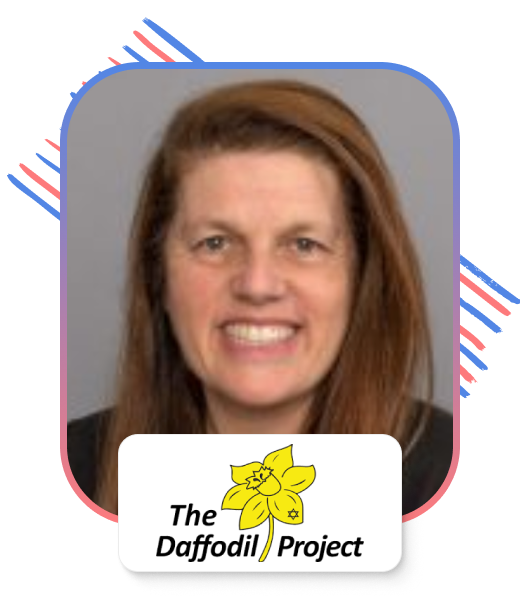
Andrea Videlefsky, a family physician in Atlanta and founder of The Daffodil Project, channels her lifelong commitment to justice into a simple, powerful symbol: a field of yellow flowers that remembers children lost in the Holocaust and speaks to children at risk today. Growing up under apartheid in South Africa sharpened Andrea’s awareness of discrimination and state‑sanctioned cruelty, and her medical work with people with developmental disabilities deepened her sense of how societies can devalue certain lives, a painful echo of Nazi persecution of disabled people. Those experiences led her to found a project that turns remembrance into action.
The Daffodil Project, an initiative of Am Yisrael Chai, “aspires to build a worldwide living Holocaust memorial” by planting 1.5 million daffodils in memory of the 1.5 million children murdered in the Holocaust and in support of children suffering in humanitarian crises today. Launched in 2010 with an initial planting of about 1,800 bulbs, the project has grown into a global network of memorial gardens across the United States, Israel, Poland, Germany, and other countries, each site accompanied by signage that explains the project’s purpose and often includes a quote from Elie Wiesel. As of their latest milestones, Andi reports that more than 1.2 million daffodils have been planted, with a celebrated “one‑millionth bulb” moment behind them and a commitment to keep going to honor the memory of the 1.5 million children and beyond.
Each daffodil garden is meant to be both beautiful and educational. The organization maintains a world map of planting sites and provides plaques or markers that describe the memorial and its connection to Holocaust remembrance and contemporary humanitarian concerns. Complementary initiatives like “Stones of Hope,” in which students paint rocks with messages of hope and resilience, deepen engagement and invite young people to see themselves as part of an ongoing story of resistance to injustice.
Operationally, the project is designed to make participation accessible while still generating support for its broader work. New partners typically receive their first 250 bulbs at no cost, with additional bulbs available for about $100 per 250, often underwritten by The Daffodil Project and other foundations such as the Mark Schonwetter Holocaust Education Foundation, so that schools and community groups can participate regardless of budget. The Daffodil Project also welcomes corporate partnerships, inviting companies to sponsor and join plantings at parks, campuses, office grounds, or schools. Upcoming events include collaborations, such as a planting with the City of Dunwoody on Martin Luther King Day of Service and annual daffodil plantings in collaboration with the City of Atlanta’s "Ribbon of Consciousness” with daffodils planted from the Center for Civil and Human Rights to the King Center.
Fundraising extends beyond bulbs. The organization hosts an annual Holocaust commemoration and the Daffodil Dash, a 5K and 1K “Race for 1.5 Million” that draws roughly 800–1,000 in-person participants, plus virtual runners. The race blends remembrance and community action: participants hear from Holocaust survivors and refugees, visit vendor tables, and contribute items for clothing drives supporting refugee communities, with proceeds helping fund daffodil plantings and assistance for survivors and children in conflict zones.
Andrea’s leadership philosophy is rooted in unwavering commitment, passion, and human connection. She speaks about drawing inspiration from Holocaust survivors’ resilience, staying open to innovation, and working side by side with volunteers and partners rather than leading from a distance. Her advice to younger leaders is to commit to the long haul, nurture their passion, prioritize real human relationships over screens, and remember that every act, whether planting a single bulb or organizing a city‑wide race, can contribute to a more just and compassionate world.
Learn More - https://www.daffodilproject.net/
Doyle Stevick & the Anne Frank Center at USC: Building Upstanders Through Peer Education
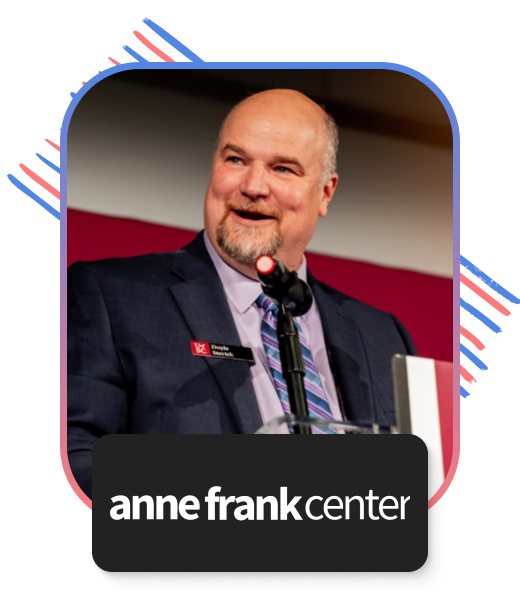
Doyle Stevick, founder and director of the Anne Frank Center at the University of South Carolina, was drawn to Holocaust education by personal encounters with racism and hate crimes that left him determined to understand and prevent the ideologies behind them. As the official partner of the Anne Frank House for the United States and Canada, he now leads an organization whose mission is to ensure each generation “remembers the story of Anne Frank and the Holocaust, understands the threat of antisemitism and any form of bigotry, and is prepared to advocate for peace and justice.
The Center emphasizes transformational educational experiences that shift students from passive learning to active upstanderism. Drawing on the Anne Frank House’s innovative peer‑to‑peer education model, Doyle brings university students together to discuss the Holocaust, navigate toxic online environments, and practice evidence‑based reasoning to discern truth from propaganda. These programs empower young people to challenge prejudice in real time, as in one case where a student confronted antisemitic remarks among peers. Doyle sees success not just in knowledge gained, but in students’ growing ability to question hate and build communities committed to peace before crises erupt.
Operationally, the Center has grown from a startup into a million‑dollar organization without traditional fundraising campaigns. Revenue comes from public support, grants, exhibit rentals, and philanthropy, allowing Doyle to focus on mission while building a strong team and extending programs to underserved areas. He views diversity as an asset, not merely the absence of bigotry, and prioritizes bringing Holocaust education to communities that might otherwise miss it.
Doyle’s leadership centers on community and humility. He describes true leadership as recognizing one’s limits, caring deeply for people, and fostering open dialogue that honors common humanity and cultural understanding, core values aligned with Otto Frank’s (Anne’s father) vision. His advice to aspiring leaders: focus on asking the right questions rather than always providing answers, and build relationships that turn individuals into a caring, resilient collective. Through the Anne Frank Center, Doyle is creating exactly that - a network of upstanders ready to advocate for justice in a divided world.
Learn More - https://www.annefrankcenter.com/
Rozalie Jerome & Holocaust Remembrance Association (HRA18): Healing Through Remembrance and Art
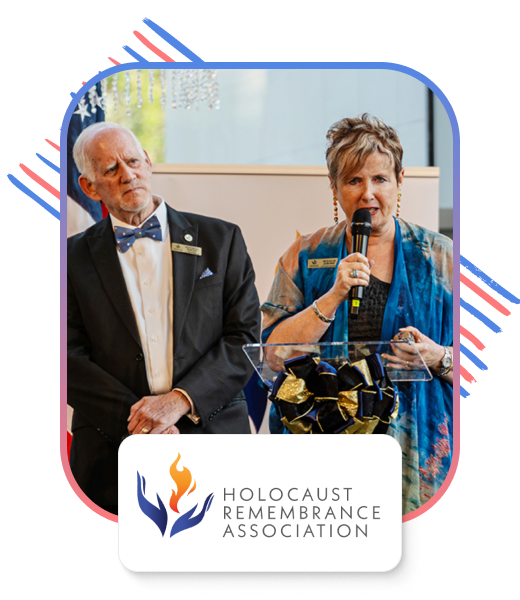
Rozalie Jerome, founder and president of the Holocaust Remembrance Association (HRA18), leads with a vision of “sensitizing hearts to the issues of the Holocaust” through reconciliation, education, and creative expression. As a second‑generation survivor, she describes her role as a calling rather than a choice, sparked by a divine vision to host marches of remembrance that bring together Jews, Christians, Holocaust survivors, Nazi descendants, and rescuers in shared healing and reflection. Working with advisors including the former director of the Holocaust Museum Houston, she has grown HRA18 from its founding in 2019, coincidentally on International Holocaust Remembrance Day, into a force for community transformation.
HRA18 focuses on annual Marches of Remembrance that honor victims, liberators, and rescuers, with the first event drawing 1,000 participants from 35 churches. Programs like the Upstander Stone Project engage schools and businesses in painting stones inscribed with the names of the 1.5 million Jewish children killed in the Holocaust, turning remembrance into a tangible, hands‑on act of solidarity. The organization also produces prayer walks, films, YouTube content, and events featuring repentant Nazi descendants, all of which are offered free to foster empathy and understanding.
A major focus is the Holocaust Garden of Hope, an outdoor museum project in Houston with exhibits on “Why Remember the Holocaust” and “Life Before the Holocaust,” now open to the public. The $5 million initiative, partnering with Texas A&M University and the Texas Historical Commission, needs another $3 million, supported by a professional grant writer, fundraiser, and strategic storyteller to build a compelling case for donors. Rozalie emphasizes art, theater, and music over dry facts to touch hearts and inspire action against antisemitism.
Leadership, for Rozalie, is about authenticity and service. She steps back from the executive director role while remaining deeply committed, prioritizing partnerships, adaptability, and a team that shares the mission of healing relationships between Jews, Christians, and God. Though fundraising remains a challenge, her approach, leveraging networks and free programming, has sustained growth, with HRA18 now hiring an executive director to scale impact. Through marches, stones, and gardens, Rozalie is creating spaces where remembrance leads to reconciliation and resilience.
Learn More - https://holocaustremembranceassociation.org/
Mark Katrikh & Museum of Tolerance: Challenging Hate Through Dialogue and Discovery
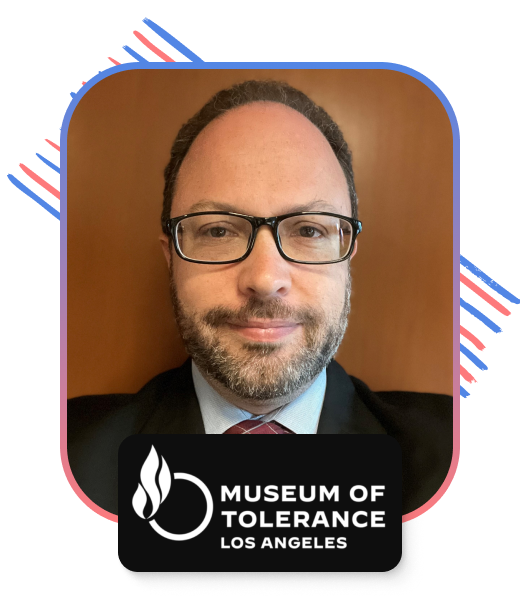
Mark Katrikh, Deputy Director of the Museum of Tolerance in Los Angeles, brings 25 years of experience to an institution founded on Simon Wiesenthal’s vision: using Holocaust lessons to promote tolerance, understanding, and civil discourse in today’s world. An immigrant whose grandmother shared Holocaust stories, Mark was drawn to the museum’s focus on cultural change and how organizations integrate diverse perspectives into their work. He sees the museum not as a history repository, but as a place to help visitors connect past atrocities to present challenges like antisemitism and bigotry, fostering empathy through survivor testimonies and open dialogue.
The museum engages about 200,000 students annually through school visits, educator training, and professional programs for fields from law to business. A major push is its mobile museums, now expanding to states including Northern California, New York, Florida, Illinois, and Massachusetts, to reach audiences who can’t visit the Los Angeles campus. These traveling exhibits challenge assumptions and spark conversations in underserved communities, though scaling them requires significant capital for vehicles, staffing, and operations. In development is a new exhibition on antisemitism, designed to address rising incidents through education and reflection.
Funding blends grassroots support, grants, and earned revenue, with data from visitor interactions helping refine content and make compelling cases to donors. Mark credits past successes for building momentum, enabling the museum to sustain its reach while investing in growth, such as the mobile fleet.
Mark’s leadership philosophy is to listen first. He emphasizes curiosity, removing barriers to allow teams to thrive, and staying attuned to finances and operations even outside one’s direct role. With a supportive CEO and mission‑driven staff, he focuses on empowering others, avoiding surprises through clear communication, and learning from every corner of the work, from event planning to budgeting. His advice to aspiring leaders: be curious about everything, listen actively, and prioritize what enables your team’s best work. At the Museum of Tolerance, that approach turns visitors into advocates who carry lessons of tolerance into a divided world.
Learn More - https://museumoftolerance.com/
Talli Dippold & Hilton Family Holocaust Education Center: From Hate to Hope, Inspiring Upstanders
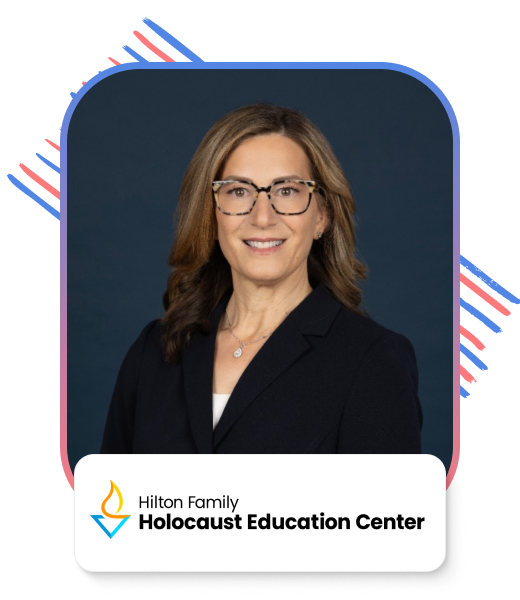
Talli Dippold, Executive Director of the Hilton Family Holocaust Education Center (HFHEC) in Phoenix, Arizona, brings the perspective of a granddaughter of four Holocaust survivors to her mission of preserving stories and creating “upstanders” for a world without antisemitism, hatred, and bigotry. With deep experience leading the Stan Greenspoon Holocaust Education Center in Charlotte and developing the Holocaust Museum for Hope and Humanity in Orlando, Talli sees Holocaust education as urgent amid rising antisemitism and the fading of survivor voices.
A project of the Arizona Jewish Historical Society, HFHEC will open in April 2027 on the historic grounds of Phoenix’s first synagogue, the Cutler✡Plotkin Jewish Heritage Center. The 31,000‑square‑foot facility will feature immersive digital exhibits designed by G&A, including galleries on the Holocaust, Jewish life and heritage, antisemitism, survivor experiences post‑1945, racism, and other genocides, all guided by values of remembrance (zakhor), life (chai), and repairing the world (tikkun olam). Programs will prioritize grades 7–12, with teacher resources, school tours, and lectures, expecting 50,000 annual visitors to foster critical thinking, media literacy, and action against hate.
The center is in the final phase of a $48 million capital campaign (now at $45 million, including $10 million for an endowment), fueled by over 1,000 donors and strategic storytelling that ties education to measurable impact on intolerance. Talli emphasizes sustainability through strong management and long‑term projects that outlast immediate threats, measuring success by the number of upstanders who apply Holocaust lessons to today’s challenges.
Talli’s leadership is collaborative, compassionate, and mission‑driven. She prioritizes listening, investing in her team, focusing on outcomes rather than micromanagement, and embracing a long‑term view in which education builds compassion, even if it can’t prevent every crisis. Her advice to young leaders: find your passion, learn from failures, and commit to work that endures. Through holograms, interactive exhibits, and community engagement, HFHEC aims to honor 6 million victims while empowering the next generation to stand against hate.
Learn More - https://hfhecaz.org/
Shared Lessons from Leaders
These conversations reveal striking commonalities amid diverse approaches. Across these 12 diverse leaders, a clear pattern emerges: Holocaust education thrives when it’s personal, innovative, and action‑oriented. Their stories, spanning startups to established institutions, illuminate strategies that work amid rising antisemitism and fading survivor testimonies.
- Personal Stories Drive Impact: Nearly every leader cited family ties to the Holocaust or personal encounters with hate as their spark - refugee journeys, survivor grandparents, or schoolyard antisemitism. This authenticity grounds their work, making abstract history feel immediate and urgent.
- Innovation Meets Memory: From holographic survivors and cattle cars to daffodil fields and theater, leaders blend tech (VR, AI experiments) with living testimony to combat short attention spans and online denial. Mobile exhibits and peer programs extend reach beyond walls, targeting underserved areas.
- Upstanders Over Bystanders: A unifying goal: cultivate “upstanders” who challenge hate in hallways, online, or communities, measuring success by changed behaviors such as reduced bullying or rallying peers.
- Sustainability Challenges and Strategies: Grassroots donations fuel startups, but leaders diversify via endowments, corporations, and grants amid tight budgets; collaborations trump competition in this “tight-knit” field.
- Leadership: Listen, Empower, Persist: Echoing across profiles: lead by listening, empower teams, embrace long-term views, and stay curious, asking questions over dictating answers.
A Call to Action
These leaders remind us that remembrance isn’t passive; it demands action - donating, volunteering, or advocating for education mandates. As survivors fade, their work ensures “Never Again” endures. Explore their sites, support a local program, or start a conversation: the fight against hate starts with us.
Ready to leave your footprints?
Talk to the team that has helped 1,200+ organizations such as yours run amazing virtual & hybrid races.