The Psychology of Fitness-Based Fundraising: Walks, Runs, Rides and Beyond
TABLE OF CONTENTS
Overview
Traditional galas and dinner fundraisers are losing traction, especially among younger and tech-savvy donors. Fitness-based fundraising—like virtual walks, runs, rides, step challenges and other fitness challenges—taps into behavioral psychology to drive higher participation, deeper donor engagement, and stronger community bonds.
This blog explores why physical activity combined with giving is so effective, and how Charity Footprints, leverages fitness, competition, gamification, psychology, and global participation to help nonprofits and corporations build sustainable impact.
Request a Demo
Find out more about our fun, competitive and engaging virtual fitness challenges.
 Get In Touch
Why Traditional Galas Are Losing Their Spark
For decades, black-tie galas and fundraising dinners have been the cornerstone of nonprofit fundraising. But in today’s fast-paced, digital-first world, these events are starting to feel outdated and inaccessible. Donors are looking for experiences that go beyond a single night—something engaging, participatory, and purpose-driven.
Key reasons why galas are losing momentum:
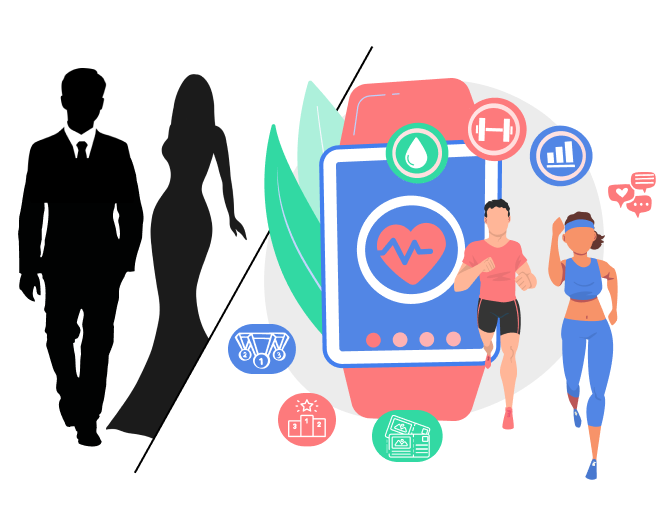
- Donor Fatigue: Formal events can feel repetitive and transactional. Once the evening ends, the momentum often fades.
- Costly Logistics: Venue rentals, catering, and entertainment can consume a large share of funds raised.
- Changing Demographics: Millennials and Gen Z donors are less motivated by black-tie dinners and more inspired by interactive, mission-driven experiences.
The Social Brain: Why We Give More When We Give Together
Humans are wired for connection, and research in behavioral psychology shows that social influence plays a powerful role in motivating giving. When people see peers and colleagues actively participating in a cause, they are more likely to join in themselves.
How social influence drives giving:
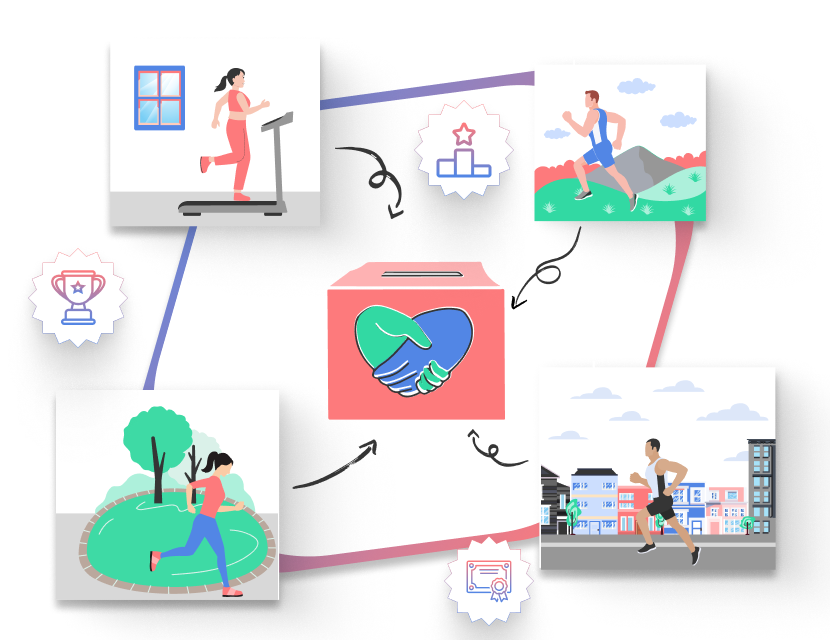
- Peer Motivation: Seeing friends, coworkers, or leaders participate creates a sense of encouragement and accountability.
- Shared Experience: Group activities like runs or fitness challenges foster belonging and community pride.
- Visibility & Recognition: Public leaderboards, social shares, and recognition moments spark healthy competition and celebration.
Dopamine, Endorphins & Motivation in Fitness Challenges
Exercise itself is a natural motivator. Physical activity releases dopamine and endorphins—the body’s “feel-good” chemicals—that boost mood and energy. When these physical benefits are tied to a meaningful cause, motivation and generosity rise exponentially.
Why fitness and giving are a powerful pair:
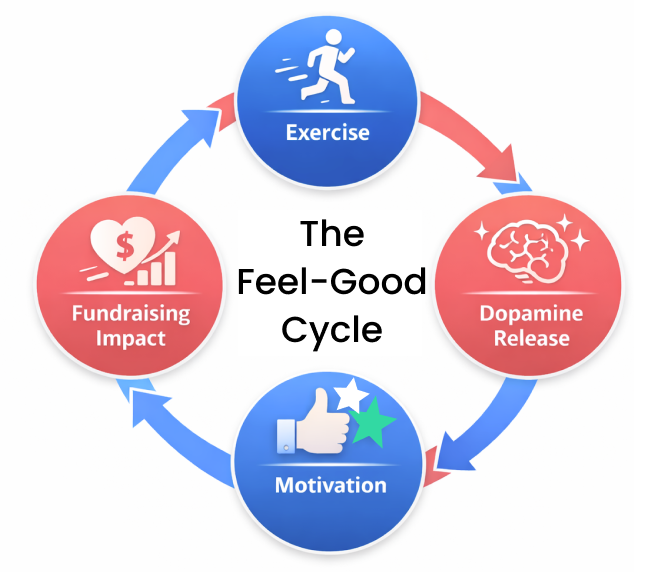
- Mood Boost: More Donations – Positive emotions from exercise make participants more likely to give and stay engaged.
- Habit Formation: Fitness challenges encourage daily or weekly routines, keeping donors consistently connected to the cause.
- Meaningful Progress: Linking fitness miles or steps directly to fundraising milestones creates tangible impact.
Gamification: Turning Fitness into Milestones
Gamification transforms fundraising into a fun, goal-driven experience. By adding elements such as— leaderboards, streaks, eBibs, eCertificates, and digital badges—participants feel recognized, challenged, and rewarded throughout their journey.
Gamification tactics that drive engagement:
- Leaderboards: Fuel healthy competition by tracking top fundraisers or most miles logged.
- Badges & Streaks: Celebrate milestones like “First 10K Steps” or “One-Week Streak.”
- Fundraising Thermometers : Provide real-time visuals that connect effort to tangible results.
Charity Footprints as a Behavior-Centered Fundraising Platform
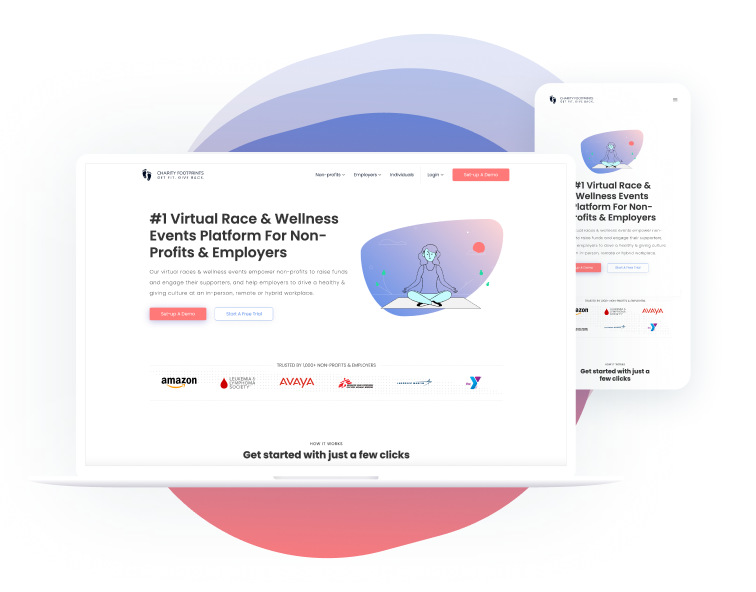
At Charity Footprints,, we don’t just host virtual races—we design experiences rooted in behavioral psychology to maximize motivation, participation, and impact. Our platform taps into what truly drives people to act by combining movement, accountability, and purpose.
Here’s how our R.A.C.E.S. framework makes it happen:
- Rewards that Motivate: From milestone badges and achievement certificates to fundraising thermometers and wellness incentives, participants are constantly recognized for their efforts. This positive reinforcement fuels consistency and long-term engagement. Add here that fundraising administrators can add custom rewards to boost relevant aspects of the campaign such as fundraising, fitness, team size etc.
- Accountability Through Tracking & Teams: Integrated fitness app and popular wearable device synchronizations, progress dashboards, and team challenges help participants stay on track. When people can measure their contributions in real time, they’re more likely to sustain momentum.
- Friendly Competition: Leaderboards, team vs. team formats, and streak-based tracking adds a layer of friendly competition that makes challenges fun, dynamic, and motivating. The thrill of competition keeps engagement high.
- Ease of Use: Our all-in-one platform simplifies registration, activity tracking, fundraising, and communication. With intuitive dashboards and mobile-friendly features, participation feels effortless, even for first-timers.Participants can use devices like Fitbit, Garmin, Strava, and Misfit to track thier progress.
- Social Impact Connection: Every mile logged and every dollar raised contributes directly to a cause participants care about. This “movement-for-a-mission” framework blends physical activity with purpose, amplifying both personal fulfillment and collective impact.
By blending rewards, accountability, competition, ease of use, and social good, Charity Footprints turns fundraising into a behavior-centered experience—one that not only supports nonprofits but also builds healthier, more engaged communities.
Final Takeaway: Psychology + Movement = Sustainable Giving
At the heart of successful fundraising lies one powerful truth: people are more likely to give—and keep giving—when they feel emotionally invested and personally connected to the cause. Traditional galas or one-off events often generate short bursts of support, but they rarely create lasting behavioral change.
Fitness-based fundraising, however, builds sustainable giving by tapping into human psychology. When participants walk, run, ride, or move for a mission, they aren’t just donating—they’re actively embodying the cause. Every step, every mile, and every challenge becomes a physical expression of commitment. This sense of ownership and accountability deepens loyalty to the nonprofit over time.
On top of that, the psychology of movement fuels habits. Rewards, social recognition, and friendly competition transform giving from a transactional act into an engaging lifestyle. People don’t just show up once—they return again and again, inspired by progress, purpose, and community.
By combining the science of motivation with the simplicity of movement, Charity Footprints, helps nonprofits transform donors into lifelong champions. This is more than fundraising—it’s a pathway to long-term engagement, healthier communities, and sustainable impact.
Ready to leave your footprints?
Talk to the team that has helped 1,200+ organizations such as yours run amazing virtual & hybrid races.