From Statistics to Stories: Leaders Fighting Impaired Driving and Unsafe Roads
TABLE OF CONTENTS
Introduction
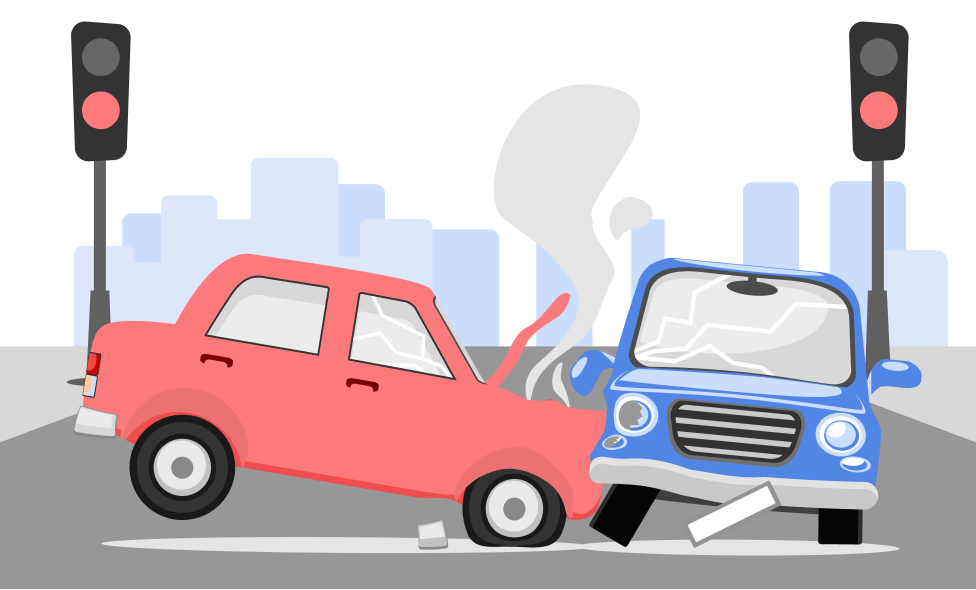
Every 85 seconds, someone in the U.S. is killed or injured in a drunk driving crash. That’s not just a statistic. That’s a phone call shattering a loved one. An empty chair at the dinner table. A pair of shoes no one will wear anymore. A family that has its life split into a “before” and an “after” because of a crash that almost always could have been prevented.
Roads are often treated as background noise in daily life, yet they are among the world’s deadliest environments. Each year, an estimated 1.19 million people are killed in road traffic crashes globally, which is now the leading cause of death for children and young adults. In the United States alone, about 41,000 people died in motor vehicle crashes in 2023, with an economic cost of around 340 billion dollars.
Impaired driving remains one of the most persistent challenges in this problem. In 2021, 13,384 people were killed in crashes involving an impaired driver, accounting for 31 percent of all U.S. traffic deaths. Alcohol is only part of the story: as cannabis and prescription drug use rise, drug‑impaired driving now contributes to a growing share of serious crashes, even as overall traffic deaths have begun to inch down from their pandemic-era peak.
These deaths are not evenly distributed. Young adults, nighttime drivers, and people in communities with higher speeds, wider roads, and weaker infrastructure carry a disproportionate share of the risk. Yet countries that have lowered speed limits, redesigned dangerous roads, and invested in enforcement and education have cut death rates dramatically, often to less than half of the U.S. level. The gap is not about what is possible; it is about choices — policy choices, design choices, and personal choices about whether to get behind the wheel after drinking or using drugs.
The leaders featured in this series sit at the intersection of statistics and lived reality. They have buried children, survived crashes, or spent careers on the front lines of victim services, engineering, law enforcement, and public health. Their work stretches from national policy and global research to neighborhood yard signs and painted rocks hidden in theme parks and other public places. Together, their stories show that the crisis of impaired driving and unsafe roads is vast, but so is the toolbox — and that lasting change comes when data, design, enforcement, and human stories all pull in the same direction.
Request a Demo
Find out more about our fun, competitive and engaging virtual fitness challenges.
 Get In Touch
Stacey D. Stewart & Kenneth H. Ceaser: MADD's Strategic Force

Stacey D. Stewart leads Mothers Against Drunk Driving (MADD) with executive precision honed over 25 years of experience leading organizations such as March of Dimes, United Way, and the Fannie Mae Foundation. Her MBA and public finance expertise guide MADD's evolution from alcohol-focused origins to eliminating all impaired driving nationwide. As CEO since 2023, she oversees operations serving 10,000+ victims annually through courtroom advocates, 24/7 hotlines, and Victim Impact Panels that deliver raw family stories directly to judges and juries. Kenneth H. Ceaser serves as Chief of Staff and Chief People & Culture Officer, aligning diverse teams amid funding challenges and visibility battles while tackling root causes such as untreated substance use disorders affecting 80% of offenders.
MADD's legislative achievements define the history of traffic safety. The organization helped implement the nationwide 21 drinking age that saved 27,052 lives, universal 0.08 BAC adoption across all 50 states, sobriety checkpoints, server liability laws, and underage zero-tolerance policies. Most recently, they championed the 2024 HALT Act, which mandates passive drunk-detection technology in every new vehicle. Full implementation of HALT by 2030 is expected to have a meaningful impact on saving lives. With alcohol causing 30% of fatal crashes (13,500 deaths yearly) and cannabis/prescription drugs surging 20% post-legalization, MADD pairs prevention with punishment through tech pilots and treatment advocacy.
Stacey positions nonprofit leadership as a powerhouse career path, scaling impact through data-driven innovation, such as sobriety apps, and strategic growth. Ken emphasizes sustained funding and brand visibility to counter myths that impaired driving is "solved”, maintaining professional rigor across diverse teams. Together they operate MADD like a Fortune 500 enterprise — adaptive, relentless, business-tight — because every family that transitions from "before" to "after" demands justice.
Learn More - https://madd.org/
Amy Cohen & Families for Safe Streets: Resilient Grief Powers Safe Streets
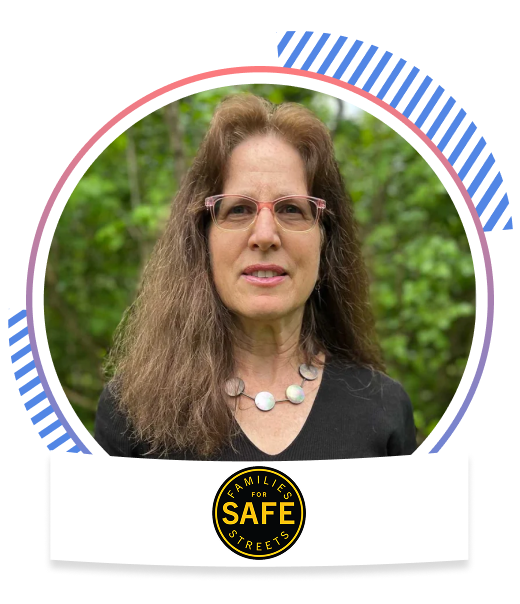
Amy Cohen carries profound grief from 2013, when a speeding van killed her 12-year-old son, Sammy, just steps from their Brooklyn home. She channeled this devastation into co-founding Families for Safe Streets (FSS) within Transportation Alternatives, organizing "Involuntary Volunteers" to demand safer streets for children.
Their pressure helped drop NYC's speed limit from 30 to 25 mph, reducing overall traffic deaths by 22% and pedestrian fatalities by 25%. Families for Safe Streets accomplished this in 4 months, a work that the insiders thought would take over a decade - if they were lucky. Additionally, in 2024, FSS won the ability for NYC to lower speed limits to 20mph with a law named after Amy's son, "Sammy's Law". FSS also won NYC the ability to establish speed safety cameras at over 2,000 locations across 750 designated school speed zones, reducing crashes by 23% and injuries by 15%, expanding to the nation's most extensive 24/7 program. New York's speed safety camera program is among the most comprehensive in the world.
Now spanning 21 chapters with 1,200 advocates nationwide, Families for Safe Streets targets super-speeders through breathalyzer-model technology campaigns. Amy highlights America's traffic death shame—twice the rate of peer nations—driven by complacency rather than policy disagreements or organized opposition. She strongly advocates proven solutions, including road diets, roundabouts, and automated enforcement.
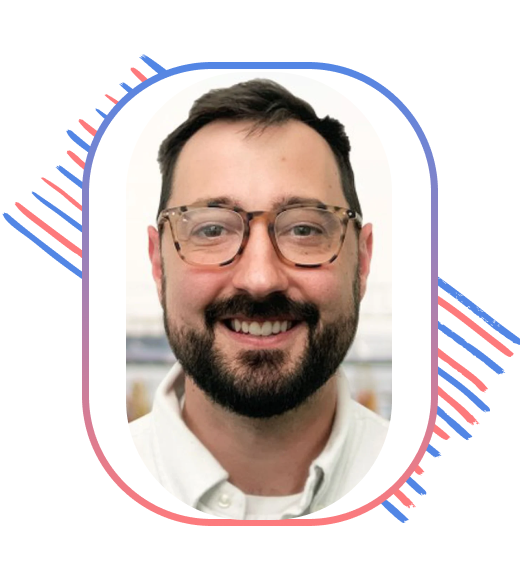
Thomas DeVito, National Director, engineered NYC's redesign and camera victories. Driven by his degenerative eye disease, which limits night driving, he passionately advocates for livable, walkable cities that promote independence. He’s helping grow FSS through a federated model that empowers local chapters, partnerships & collaborations without top-down mandates.
Amy's resilient sorrow and Tom's collaborative management turn grief into action, humanizing statistics to move mayors from Vision Zero promises to tangible results like Sammy's Law.
Learn More - https://www.familiesforsafestreets.org/
Tom Everson & Keep Kids Alive Drive 25: Uniting Neighborhoods for Slower Speeds

Tom Everson founded Keep Kids Alive Drive 25 (KKAD25) in 1998 after noticing speeders endangering children in his Omaha neighborhood. KKAD25’s mission of making streets safer for all who walk, cycle, play, drive, and ride - is basically a campaign that effects everyone.This positive campaign now reaches over 1,700 communities across 49 states, using relationships and data rather than confrontation to enforce 25 mph residential limits.
Observational studies show KKAD25's signs trigger braking in 75% of cars where speeds previously averaged 31 mph in 25 mph zones. Yard sign campaigns in Oceanside reduced average speeds 16%, while Oro Valley trash bin decals dropped speeds 13.5% to 24.5 mph without any need for enforcement.
Tom hosts podcasts featuring key voices like MADD founder Candace Lightner and collaborates with over 600 law enforcement agencies. He empowers under-resourced communities in Detroit, Phoenix, and St. Louis through initiatives like middle school art contests, "#SafeRoadsForRogi" corgi safety memes, and Avalon Village eco-revamps transforming blight into beauty. Mesquite, Texas won state legislation allowing 25 mph residential limits after post-tragedy advocacy citing data showing three times higher pedestrian deaths at 30 mph.
The annual "Live Forward!" 5K and Pikes Peak Ascent races unite families honoring crash victims, with runners carrying victims' names on the back of their shirts. Tom's collaborative leadership style connects communities as a coach and connector, stepping back to foster local ownership while mission-driven funding follows proven impact.
Learn More - https://www.keepkidsalivedrive25.org/
Diana Gugliotta: Polished Compassion Guiding Vermont Safety

Diana Gugliotta brings a broad range of experience, including advertising and teaching, as well as 17 years at AAA in traffic safety education and public relations, along with grant management for NHTSA Region 1. Her passion for road safety became intensely personal when her toddler son survived a car crash while secured correctly in his car seat. This experience ultimately guided her work across the private, public, and nonprofit sectors.
As Executive Director of the Vermont Highway Safety Alliance (VHSA), Diana leads a coalition of more than 50 partners, including state police, VTrans, health departments, and sheriffs. VHSA frames its work around the Safe System Approach, helping to modernize and strengthen Vermont’s traffic safety efforts through collaboration, data sharing, and prevention-focused strategies.
Facing a record 52 traffic fatalities in 2025—nearly 60% involving drug impairment—VHSA is addressing emerging risks such as cannabis-impaired driving through targeted awareness campaigns, focused enforcement, and community education. Currently, the alliance is working with law enforcement on Vermont’s first DUI Honor Patrol program, with police departments adopting focused enforcement efforts to honor three young people killed by impaired drivers.
VHSA also engages communities statewide through initiatives such as high school PSA contests that amplify youth voices on distracted and impaired driving, as well as public demonstrations and outreach tailored to Vermont’s diverse rural regions.
Diana leads with transparency and deep listening, engaging retirees, young people, and community members alike to build grassroots buy-in toward the shared goal of zero fatalities. Her compassionate yet firm leadership underscores a powerful truth: lasting change in road safety comes from pairing data-driven strategies with trust, collaboration, and community ownership.
Learn More - https://www.vermonthighwaysafety.org/
Larissa Vaughan-Rowe: Cautious Builder Scaling Road Safety
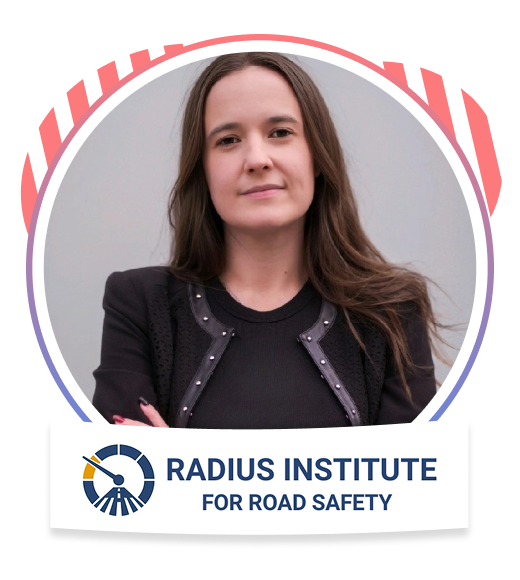
Larissa Vaughan-Rowe leads Radius Institute, incubated by Charity Entrepreneurship to address road deaths killing 1.2 million people annually — the world's top child killer costing $3.6 trillion. Currently in research phase, Radius tests evidence-based interventions like speed cameras and infrastructure upgrades in South Africa, where poor road design and speeding create massive fatality gaps. Each 1% speed reduction yields 4% fewer fatalities, representing the "upstream" prevention her personal crash experience compels her to pursue.
Road safety receives thin funding despite massive impact because it lacks "instant donate" appeal. Larissa identifies allies in ride-sharing companies and insurers who benefit from fewer crashes, recommending Ambitious Impact and Global Road Safety Partnership for evidence-based scaling in low- and middle-income countries.
Her adaptive leadership balances deep listening with decisive action, evolving from collaborative exploration to clear conviction as organizational needs demand. Post-promotion experiences taught her to remain grounded, recognizing the full humanity in both leaders and teams while forging high-leverage interventions from uncertainty.
Learn More - https://www.radiusinstitute.com/
Danette Goad: Raw Love Etching Ally's Light Worldwide

Danette Goad founded Ally Rocks 405 after a drunk driver killed her 22-year-old daughter Allyson Goad — "irreplaceable sunshine" — on September 11, 2021 as she was visiting friends in Jacksonville TX. What started with the grieving family painting rocks and hiding those at Universal Studios etched with "If someone didn't drink and drive, Ally would still be alive," exploded into a 11,500+ Facebook members hiding art across 700+ locations in 41 countries. The 4 a.m. kitchen screams when police delivered the news echo eternally in Danette's shattered heart.
Ally embodied resilience, surviving house fire PTSD with her service dog Padfoot, advocating in first grade to "lend her legs" to wheelchair classmates, buying coats for homeless strangers, welding FFA art, and easing friends' pain with laughter. Her sassy adventurer — camping, ATV riding, choir singing — lives through global art shifting drunk driving from "accident" to preventable crime.
The "DUI/DWI: Victim's Perspective" program trains hundreds of officers across OKC PD, Tulsa PD, Houston PD through academies and DRE classes. Custom challenge coins honor investigators ensuring crash scene details hold offenders accountable for shattered families. Oklahoma passed four laws last year including two strengthening enforcement through survivor testimony; Texas progresses slower but gains ground.
Corporate sponsorships, annual softball tournaments, Lego raffles, and event fees sustain operations despite board transitions — no family ever denied. Danette's raw maternal passion powers through chaos, keeping Ally's fearless light burning to shield strangers worldwide from the grief she carries daily.
Learn More - https://www.allyrocks405.com/
What These Leaders Are Seeing — and What We Can Learn
What emerges across these conversations is a clear set of lessons. Impaired driving is not “just an accident”; it is a predictable outcome of systems that normalize high speeds, easy access to alcohol and other drugs, and weak enforcement. Changing that reality requires the kind of leadership these advocates model: professional and data‑driven, but also deeply personal; willing to push for laws and technology, but equally committed to culture change in communities, classrooms, courtrooms, and police academies. For readers, the invitation is not simply to admire their work but to see a role for themselves in it — on their own street, in their own workplace, within their own circle of family and friends.
There are practical takeaways anyone can act on. Choosing never to drive impaired, planning a ride before drinking, and refusing to normalize “just a few drinks” behind the wheel are powerful first steps. Supporting local and national organizations — whether MADD’s victim services, Families for Safe Streets’ policy campaigns, Keep Kids Alive Drive 25’s neighborhood programs, Vermont’s safe‑system efforts, Radius Institute’s upstream research, or Ally Rocks 405’s officer trainings — all helps bend the numbers in the right direction. Speaking up for lower speeds, safer street designs, and stronger impaired‑driving laws in your city or state can turn personal concern into structural change.
Most of all, these stories ask readers to remember that progress is possible, but not guaranteed. Road deaths have started to decline in some regions, yet the world is still far from the goal of cutting traffic deaths and injuries in half by 2030. Whether that goal is met will depend on millions of individual decisions: to design safer roads, to pass better laws, to fund evidence‑based programs — and, every day, to put the keys down when drinking or using impairing drugs. If even one future family is spared the kind of “after” that some of these leaders live with, then the choice to act today will have been worth it.
Ready to leave your footprints?
Talk to the team that has helped 1,200+ organizations such as yours run amazing virtual & hybrid races.